Monday, July 30, 2018

The Revenge Of The Return Of Shutdown Countdown

Donald Trump apparently really wants the GOP to lose control of Congress, threatening once again over the weekend to shut down the government right before midterm elections unless he gets funding for his border wall boondoggle.

Congressional Republicans, already facing a difficult election landscape, confronted a prospect on Sunday they had worked feverishly to avoid: a threat by President Trump to shut down the government over funding for a border wall. 
“I would be willing to ‘shut down’ government if the Democrats do not give us the votes for Border Security, which includes the Wall!” Mr. Trump wrote on Twitter. “Must get rid of Lottery, Catch & Release etc. and finally go to system of Immigration based on MERIT! We need great people coming into our Country!” 
Last week, Republican leaders thought they had reached a deal with Mr. Trump to delay a confrontation on funding for the wall until after the November midterm elections, according to a person familiar with their discussion. 
But Mr. Trump’s shutdown threat, in which he also demanded several pieces of a comprehensive immigration overhaul that is stalled in Congress, has opened the door to a politically bruising spending fight as the fiscal year ends in September.
With the election coming just weeks later, the party can ill afford a disruption that voters — already disgusted by Washington dysfunction — may hold the president accountable for.
A shutdown would also distract from Senate Republicans’ main business in September: their push to confirm Judge Brett M. Kavanaugh to the Supreme Court.

You would think by now that House and Senate GOP folks would have realized that Donald Trump is a lying sack of incontinent yak dung who would gladly sacrifice each and every single Republican in DC in order to stay in power, but I never said Republicans were smart (just crafty and wholly evil.)  Trump of course has done this before.

Trump repeated his threat today during a press briefing with Italian PM Giuseppe Conte.

U.S. President Donald Trump on Monday again threatened to shut down the federal government if Congress does not pass the immigration reforms he seeks as part of a spending package that must be passed by the end of September.

If we don’t get border security, after many, many years of talk within the United States, I would have no problem doing a shutdown,” Trump said during a news conference with visiting Italian Prime Minister Giuseppe Conte. 
Asked if he required the full $25 billion the White House has requested to build a wall along the U.S. border with Mexico, as well as his other immigration priorities, in order to avert a shutdown, Trump replied, “I always leave room for negotiation.”

Surprise, Trump doesn't think your deal is worth crap, boys.  And these clowns never seem to understand that there is no such thing as a deal with Trump.

I hope Democrats have gotten this through their heads already.  Republicans certainly have not.

Putting A Price Tag On It

The Koch-funded Mercatus Center is putting a $32.6 trillion price tag on Medicare For All over ten years, and precisely nobody's happy about it, least of all Bernie.

Sen. Bernie Sanders’ “Medicare for all” plan would increase government health care spending by $32.6 trillion over 10 years, according to a study by a university-based libertarian policy center. 
That’s trillion with a “T.” 
The latest plan from the Vermont independent would require historic tax increases as government replaces what employers and consumers now pay for health care, according to the analysis being released Monday by the Mercatus Center at George Mason University in Virginia. It would deliver significant savings on administration and drug costs, but increased demand for care would drive up spending, the analysis found.
Sanders’ plan builds on Medicare, the popular insurance program for seniors. All U.S. residents would be covered with no copays and deductibles for medical services. The insurance industry would be relegated to a minor role. 
“Enacting something like ‘Medicare for all’ would be a transformative change in the size of the federal government,” said Charles Blahous, the study’s author. Blahous was a senior economic adviser to former President George W. Bush and a public trustee of Social Security and Medicare during the Obama administration. 
Responding to the study, Sanders took aim at the Mercatus Center, which receives funding from the conservative Koch brothers. Koch Industries CEO Charles Koch is on the center’s board. 
“If every major country on earth can guarantee health care to all, and achieve better health outcomes, while spending substantially less per capita than we do, it is absurd for anyone to suggest that the United States cannot do the same,” Sanders said in a statement. “This grossly misleading and biased report is the Koch brothers response to the growing support in our country for a ‘Medicare for all’ program.” 
Sanders’ office has not done a cost analysis, a spokesman said. However, the Mercatus estimates are within the range of other cost projections for Sanders’ 2016 plan. 
Sanders’ staff found an error in an initial version of the Mercatus report, which counted a long-term care program that was in the 2016 proposal but not the current one. Blahous corrected it, reducing his estimate by about $3 trillion over 10 years. Blahous says the report is his own work, not the Koch brothers’.

I would think there's a happy medium between spending $3 trillion a year and what we have now, of course when we tried that, Republicans and more than a few Democrats did their dead-level best to dismantle such a plan, maybe you heard of that whole Affordable Care Act thing.

Yes, this is the Koch brothers going after Bernie and unfairly, but Medicare For All isn't going to be free, either.  I would like to see Bernie's hard numbers too, but it's his own damn fault if he's silly enough to let the Kochs get ahead of him on this. 

Bernie can fix this by putting out his own numbers, and until he does, other right-wing think tank shops are going to keep beating him into the ground on this.  He hasn't done so yet, and that's nobody's fault but his own.

StupidiNews!

Sunday, July 29, 2018

Last Call For Trump Cards, Con't

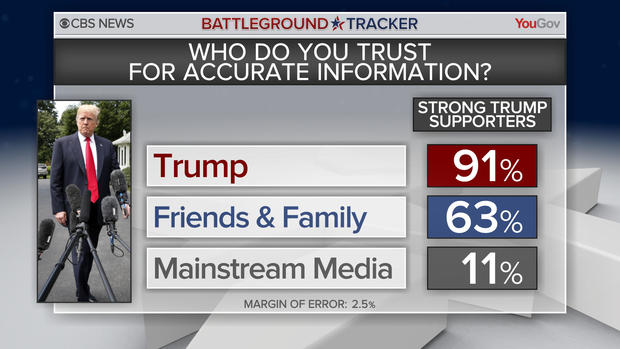
Trump supporters are lost to Democrats right now, and Democrats should stop trying to win them over.

Nearly all Americans say Russian meddling in the 2018 midterm elections would be unacceptable, even if their party was the beneficiary of any interference. But the investigation into Russian meddling in the 2016 campaign remains a divisive political issue, with Republicans more likely to doubt the FBI and U.S. intelligence agencies and more likely to back the president, a new CBS News poll found.

Half of Republicans say that hearing criticisms of President Trump on the Russia issue makes them want to defend him more. Another 42 percent say they want to wait to see what the facts show.

Seventy percent of Republicans call the Russia investigation a "witch hunt," while Democrats call it a "critical" matter of national security (77 percent). Democrats, however, say they believe the issue speaks to the president's character (79 percent) as well as national security, but Republicans disagree, seeing it as a deliberate attempt to slow the president's agenda (81 percent) and feeling he is facing more resistance from the political establishment than other presidents have (86 percent). 

So there's some hope for the people who want to see what the facts show, right? As in "If the media was able to report on conclusive evidence against Trump" they'd change their minds, right?


Oh, never mind then.  They're lost.

The larger problem is the vast majority of Americans believe media is inaccurate.

So no, even if the media does report on such conclusive evidence, the majority of Americans probably won't believe it anyway.

This is why I keep saying that a political, not a legal solution to Trump, is the only way out.

With 100 days to go until the election, that's worth keeping in mind.

Trump's Race To The Bottom, Con't


The traffic sign that greets visitors on the south side of Ulysses, a tiny town in rural far north-central Pennsylvania, is suitably quaint — a silhouette of a horse-drawn cart reminding drivers that the Amish use the roads, too. But on the north side of town, along the main thoroughfare, is a far different display: a home dedicated to Adolf Hitler, where star-spangled banners and Nazi flags flutter side by side and wooden swastikas stand on poles.

White supremacy has had a continuous presence in Ulysses and surrounding Potter County since the Ku Klux Klan arrived a century ago, giving the town — with a population today of about 650 — improbable national significance. In the mid-2000s, it hosted the World Aryan Congress, a gathering of neo-Nazis, skinheads and Klan members.

This year, after a sting operation, federal prosecutors charged six members of an Aryan Strike Force cell with weapons and drug offenses, contending that they had plotted a suicide attack at an anti-racism protest. A terminally ill member was willing to hide a bomb in his oxygen tank and blow himself up, prosecutors said. The group had met and conducted weapons training in Ulysses.

Neo-Nazis and their opponents here say that white extremists have grown more confident — and confrontational — since the rise of Donald Trump. Two months before the 2016 presidential election, the KKK established a “24 hour Klan Line” and sent goody bags containing lollipops and fliers to hundreds of homes. “You can sleep tonight knowing the Klan is awake,” the message read. A regional newspaper ran Klan advertisements saying, “God bless the KKK.”

Local police said the group had not openly recruited in years.

Two weeks later, the area’s two neo-Nazi groups, the National Socialist Movement (NSM) and Aryan Strike Force, held a “white unity meeting” in Ulysses to discuss their response to Trump and plan joint action. One organizer would not say when the groups had last met, simply commenting: “It’s just a good time.”

Potter County is staunchly Republican and has voted Democratic once since 1888; Trump received 80 percent of the vote, tying with Herbert Hoover for the highest percentage won.

“I can tell you with certainty that since November 2016, activity has doubled, whether it’s feet on the street or money orders or people helping out,” said Daniel Burnside, 43, a woodcarver who owns the Nazi-themed home and directs the state chapter of the National Socialist Movement, a far-right group that was founded in Detroit in the mid-1970s. It has a presence in many states, according to the Southern Poverty Law Center, which tracks extremist groups, and the NSM was among the groups taking part in the violent August 2017 rally in defense of Confederate statues in Charlottesville.

We have meetings every 30 days,” he said. “ There’s more collaboration.

The assholes are openly recruiting and meeting and they vote GOP.  It's weird, because Republicans will tell you the real racists are Democrats.  The KKK didn't get the memo, I guess.

Trump sure did however.
 

Both Sides Against The Middle, Georgia Edition

Kevin Sack and Alan Blinder at the NY Times preview the Georgia Governor's race, and apparently the state being governed by a white guy who has a big truck so he can haul illegals away is just as awful for the state as having...a black woman in charge.  What's a centrist to do?

The Republican won the nomination Tuesday after branding himself a politically incorrect conservative who would “round up criminal illegals” and haul them to the border in his very own pickup. The Democrat all but opened her campaign by demanding that the iconic carvings of Jefferson Davis, Robert E. Lee and Stonewall Jackson be sandblasted off Stone Mountain.

Almost overnight, Georgia’s captivating governor’s race between Brian Kemp and Stacey Abrams has taken on the dimensions of a defining moment, one that will, regardless of outcome, determine what the state represents and how it is perceived. That voters chose these two candidates reflects how Americans are embracing politicians on the basis of culture and identity, and how Georgia’s politics are catching up with its rapid demographic change: The nonwhite population has grown to 40 percent from 29 percent since 1990.

But Georgia’s political middle, long the dominant force behind the state’s thriving commerce and pragmatic leadership, suddenly finds itself all but abandoned
.

More starkly than in most midterm campaigns, the contest between Mr. Kemp, the two-term Republican secretary of state, and Ms. Abrams, a former Democratic leader in the State Legislature, has come to mirror the disorienting polarization of the Trump era and expose the consequences of a primary system that increasingly rewards those who appeal to the fringes.

So it's not a story about who will win, it's a story about who will lose: Georgia's white moderate center, who is under assault by the racist Trump right who nominated an immigrant-hating bigot and the equally awful "identity politics" left who nominated a Confederate-hating black woman.  Whoever wins, the state's "thriving commerce and pragmatic leadership" will be eliminated apparently.

Was this written by Third Way?

In Georgia, perhaps the Deep South’s most essential economy, the 2018 campaign is a point of demarcation. In the five decades since the death of legal segregation, the image-conscious state has been led by a succession of white male centrist governors — first moderate Democrats, then, for the last 16 years, right-leaning Republicans. They have more often than not been steady and bland, focused on improving education, corporate recruitment and job growth. The unemployment rate has declined by more than 6 percentage points since the current governor, Nathan Deal, took office in 2011.

But to date, neither Ms. Abrams nor Mr. Kemp has rushed to occupy that political space. With both candidates bolstered by huge wins in their primaries, there is no clear indication that either plans to abandon their base-driven strategies for a wholesale pivot toward the center. The race has come to be seen, in the words of Mr. Kemp at a Republican unity rally near Atlanta on Thursday night, as a battle for “literally the soul of our state.

"WHY WON'T THEY PIVOT TO THE MIDDLE?" they screamed into the abyss.

Ms. Abrams, 44, a brainy Yale Law graduate from Atlanta, has leveraged the prospect of becoming the country’s first female African-American governor to nationalize her campaign and its fund-raising. By contrast, Mr. Kemp, 54, is a drawling agri-businessman from Athens who has revived a populist style that has lain dormant in Georgia since the late 1960s. Both campaigns say they are committed to maximizing turnout by their most rabid supporters rather than moderating in order to broaden their appeal to centrists and independents.

Each side frames the election of the other in doomsday terms. Mr. Kemp, the Democrats fear, will take Georgia the way of North Carolina and Indiana, which were tarnished by recent legislative battles over issues like gay rights and the use of public restrooms by transgender people. Republicans warn that Ms. Abrams, who hopes to expand Medicaid health coverage for the poor and disabled, will raise taxes they have cut, reverse the state’s job growth, deplete its rainy-day surplus and threaten its superior bond ratings.

The "most rabid supporters" on Kemp's side are actual white supremacists.The "most rabid supporters" on Abrams's side are "people who think a giant monument to slavery is bad."

The story then goes on to quote several "moderates" and former Georgia politicians who think both candidates are terrible and that they don't think moderates in the state will vote at all because of the "partisanship".

Most of all, they worry about the state's "business climate" if either one is elected.

This is what passes for a politics story in the NY Times in 2018.

Ahh, but the much bigger problem that "moderates" and everybody in Georgia need to worry about is the fact that the Kemp is the Republican Secretary of State and believes Russian interference in the 2016 election was all but a hoax, and that he's taking no action to secure the state's voting systems against attack because he doesn't believe one is possible.

In August, 2016, when the scope of the Russian hacking effort was becoming clear to President Obama—and as he and his advisers struggled to find a response that would not undermine the legitimacy of the upcoming elections, or provoke the Russians to do more damage, or appear to confirm Trump’s assertion that the election was rigged—Jeh Johnson, the Secretary of Homeland Security at the time, suggested designating the American election system as “critical infrastructure,” a category that includes bridges and the power grid. This designation would enable D.H.S. to offer cybersecurity support to individual states. And this inflamed Brian Kemp.

Labelling elections as critical infrastructure, Kemp declared, opened the door for the federal government to “subvert the Constitution to achieve the goal of federalizing elections under the guise of security.” Georgia is one of only five states that uses voting machines that create no paper record, and thus cannot be audited, and the Center for American Progress has given it a D grade for election security. But, when D.H.S. offered cybersecurity assistance, Kemp spoke out against it. (Georgia has since accepted some help from D.H.S.)

“It seems like now it’s just the D.C. media and the bureaucrats, because of the D.N.C. getting hacked—they now think our whole system is on the verge of disaster because some Russian’s going to tap into the voting system,” Kemp said at the time. “And that’s just not—I mean, anything is possible, but it is not probable at all, the way our systems are set up.”

And yet, as it turned out, that was exactly the way the system in Georgia was set up. We know this because, a few days before Kemp blasted the D.H.S. and dismissed the D.N.C. hack, a young security researcher in Georgia named Logan Lamb began poking around the Web site of Kennesaw State University’s Center for Election Systems, looking for vulnerabilities. The Center was under contract with the Georgia secretary of state’s office—Kemp’s office—to program and test all the voting machines in the state, train state election workers, and distribute the state’s electronic voter-registration database to the counties. With the entire state election system housed in one place, the Center was a high-value, potentially vulnerable target. Lamb, who worked for an Internet-security company called Bastille, wanted to find out how vulnerable.

On the Center’s Web site, Lamb quickly discovered a trove of unsecured files—fifteen gigabytes’ worth. Among the files were lists of passwords that would allow election workers to sign into a central server on Election Day, and the systems that prepared ballots and tabulated votes. He also found software for the state’s “poll books,” electronic databases that are often used to verify people’s eligibility to vote, as well as a security hole through which he could download the entire database of the state’s 6.7 million registered voters. The files had been publicly exposed for so long that they were cached on Google. He also saw that the Center had failed to fix a well-known glitch in its content-management system through which hackers could take control of the site. A patch for this issue had been publicly available for two years.

Kemp's office will count the votes in November and will determine who is eligible to vote, by the way.  But the real problem is the divisive black lady is mean to Georgia's history, right?


Sunday Long Read: ICE In The Melting Pot

The country's largest single city of undocumented immigrants is NYC, and in the Trump era, that means the Big Apple is the biggest target around.  Now New Yorkers live in fear as ICE has descended upon the city with the mission to round up and deport hundreds of thousands, and the city is waging war to protect them.

An estimated half-million New Yorkers are undocumented. Whether they’ve lived here for two months or 20 years, they came to this city of immigrants—a place where more than a third of the population was born in another country—looking for the same things that have brought newcomers here for centuries: work and school opportunities, religious freedom, family, and a haven from violence, persecution, political upheaval, and natural disaster.

In this “sanctuary city,” the local government promises to defend New Yorkers regardless of status, restricting law enforcement cooperation with federal immigration agents (although not prohibiting it entirely, to the chagrin of many immigrant advocates). But in recent months, with headlines about terrified toddlers in “baby jails” and a president who refers to migrants as an “infestation,” it’s become increasingly clear: In the era of Donald Trump, even New York City doesn’t feel safe for the undocumented.

Now, these are everyday scenes in the city: An Ecuadorian man gets arrested while delivering pizza in Brooklyn. A Chinese father of two is detained during an interview to become a legal permanent resident. Across the boroughs, there have been reports of Immigration and Customs Enforcement agents appearing in courthouses, workplaces, neighborhood streets, even a church, according to one advocacy group, sowing panic.

In the eight months after Trump’s inauguration, ICE arrests in the New York area jumped by 67 percent compared to the same period in the previous year, and arrests of immigrants with no criminal convictions increased 225 percent. During that time, ICE arrested 2,031 people in its New York “area of responsibility,” which includes the five boroughs and surrounding counties. These aren’t unprecedented numbers: ICE arrested almost four times as many people in New York City in 2010 as it did last year, and it picks up far fewer people here than in some other parts of the country.

Thanks to free legal assistance, in which the mayor has invested $30 million, according to the city, immigrant New Yorkers are more likely to be represented in court than many of their counterparts around the country. (Eighty percent in Queens versus, say, 39 percent in South Carolina.) Partly as a result, they’re less likely to get deported, according to data from Syracuse University’s Transactional Records Access Clearinghouse. Among the five U.S. counties with the highest volume of immigration cases, Queens had the highest proportion of immigrants who were granted deportation relief and the lowest proportion ordered removed from the country.

Despite all of that, Trump’s immigration crackdown has instilled a new level of fear throughout the city. Before he took office, many immigrants who were considered low priority for deportation—because they didn’t have criminal records, for example—were allowed to stay as long as they regularly reported to immigration authorities. But soon after his inauguration, Trump expanded the number of people considered a priority for deportation, and now, people whose only offense is staying in the country illegally are being flagged for removal.

For many immigrant New Yorkers, once ordinary activities are now fraught with dread.

Some immigrants who have been arrested by federal agents say they’ve been made to feel like criminals, subjected to inhumane conditions in overcrowded detention facilities while they await deportation proceedings, which can take months or even years. Meanwhile, their desperate families scramble to scrape together legal fees that easily reach thousands of dollars. Although many manage to stave off deportation with the help of a lawyer, others are not so lucky. Flown to unfamiliar countries where they may not have lived in decades, the deported often arrive with no money, no cell phone, no transportation, no place to stay. Back in New York City, their absence, often dizzyingly sudden, leaves children, spouses, parents, siblings, friends, colleagues, churches, and entire communities reeling—and wondering who could disappear next.

"All of those in violation of the immigration laws may be subject to immigration arrest, detention and—if found removable by final order—removal from the United States," ICE spokesperson Rachael Yong Yow said. The agency takes abuse allegations very seriously and is "committed to ensuring that those in our custody reside in safe, secure, and humane environments," she added.

It’s perhaps no surprise that many immigrant New Yorkers, who for years have tried to do the right thing, such as paying taxes and checking in with ICE, are retreating into the shadows. “This Trump administration came in and immigrants, even the permanent residents, even the people who have their status, they have this fear. And the people who are undocumented, I think they realize it’s time to hide,” says Youngmin Lo, 35, an undocumented South Korean who is a pastor at Faith Presbyterian Church of Maspeth, Queens.

The Marshall Project and New York Magazine contacted more than 100 people around the city—immigrants, lawyers and advocates—to find out what life is like for undocumented New Yorkers in the age of Trump. There was the 23-year-old undocumented Dominican woman from the Bronx who was detained on her honeymoon in Niagara Falls. The Manhattan teenager who couldn't bring herself to tell her friends that her father was deported to Gambia. And the bright middle school student in Harlem who suddenly disappeared earlier this school year; an aunt told her principal that her family had fled to Canada to escape ICE. “Palpable fear has just become part of their lives at this point,” said Dr. Constance Bond of St. HOPE Leadership Academy Charter School in Harlem, about her students from immigrant families. As it has for hundreds of thousands of New Yorkers.

And once the Roberts Court replaces Kennedy with Kavanaugh, the gates will be opened, and the Battle for New York will begin in earnest.

Saturday, July 28, 2018

Last Call For Housing Of Pain

Glenn Thrush at the New York Times notes that the affordable housing crisis in America has only gotten worse under the Trump regime, and that millions of Americans will receive no help from the federal government.  After all, HUD Secretary Ben Carson doesn't even think HUD should exist.

The country is in the grips of an escalating housing affordability crisis. Millions of low-income Americans are paying 70 percent or more of their incomes for shelter, while rents continue to rise and construction of affordable rental apartments lags far behind the need.

The Trump administration’s main policy response, unveiled this spring by Ben Carson, the secretary of housing and urban development: a plan to triple rents for about 712,000 of the poorest tenants receiving federal housing aid and to loosen the cap on rents on 4.5 million households enrolled in federal voucher and public housing programs nationwide, with the goal of moving longtime tenants out of the system to make way for new ones.

As city and state officials and members of both parties clamor for the federal government to help, Mr. Carson has privately told aides that he views the shortage of affordable housing as regrettable, but as essentially a local problem.

A former presidential candidate who said last year that he did not want to give recipients of federal aid “a comfortable setting that would make somebody want to say, ‘I’ll just stay here; they will take care of me,’” he has made it a priority to reduce, rather than expand, assistance to the poor, to break what he sees as a cycle of dependency.

And when congressional Democrats and Republicans scrambled to save his department’s budget and rescue an endangered tax credit that accounts for nine out of 10 affordable housing developments built in the country, Mr. Carson sat on the sidelines, according to legislators and congressional staff members.

Local officials seem resigned to the fact that they will receive little or no help from the Trump administration.

“To be brutally honest, I think that we aren’t really getting any help right now out of Washington, and the situation has gotten really bad over the last two years,” said Chad Williams, executive director of the Southern Nevada Regional Housing Authority, which oversees public housing developments and voucher programs that serve 16,000 people in the Las Vegas area.

Nevada, ground zero in the housing crisis a decade ago, is now the epicenter of the affordability crunch, with low-income residents squeezed out of once-affordable apartments by working-class refugees fleeing from California’s own rental crisis.

“I think Carson’s ideas, that public housing shouldn’t be multigenerational, are noble,” Mr. Williams said. “But right now these programs are a stable, Band-Aid fix, and we really need them.”

Local governments do have a lot of blame to take for housing issues.  Local politicians are elected by homeowners, and homeowners want property values as high as possible after the housing collapse ten years ago. Increasing property values to create a better tax base was the only priority for cities and counties over the last decade, because without that, everything else falls apart.

So zoning laws became worse, and voters elected people who would raise property values back to where they were ten years past, and that meant being as hostile as possible to the concept of affordable housing.

Of course the Trump Regime then basically got out of the affordable housing business altogether, so for millions of us, it's not going to get any better anytime soon.

Why the Trump regime is trying to bring on another housing collapse, well, if you're as obviously turned on by autocracy as Trump is, the chaos of another 2008 housing collapse sure would be useful, right?

Bad Moonves Rising

Long-time CBS head Les Moonves is the latest subject in another of Ronan Farrow's shocking sexual abuse exposes, and making it all that much worse, Moonves has been a strong supporter of the #MeToo movement, only of course to be one of the most prominent Hollywood sexual predators in the business.

For more than twenty years, Leslie Moonves has been one of the most powerful media executives in America. As the chairman and C.E.O. of CBS Corporation, he oversees shows ranging from “60 Minutes” to “The Big Bang Theory.” His portfolio includes the premium cable channel Showtime, the publishing house Simon & Schuster, and a streaming service, CBS All Access. Moonves, who is sixty-eight, has a reputation for canny hiring and project selection. The Wall Street Journalrecently called him a “TV programming wizard”; the Hollywood Reporterdubbed him a “Wall Street Hero.” In the tumultuous field of network television, he has enjoyed rare longevity as a leader. Last year, according to filings with the Securities and Exchange Commission, he earned nearly seventy million dollars, making him one of the highest-paid corporate executives in the world.

In recent months, Moonves has become a prominent voice in Hollywood’s #MeToo movement. In December, he helped found the Commission on Eliminating Sexual Harassment and Advancing Equality in the Workplace, which is chaired by Anita Hill. “It’s a watershed moment,” Moonves said at a conference in November. “I think it’s important that a company’s culture will not allow for this. And that’s the thing that’s far-reaching. There’s a lot we’re learning. There’s a lot we didn’t know.”

But Moonves’s private actions belie his public statements. Six women who had professional dealings with him told me that, between the nineteen-eighties and the late aughts, Moonves sexually harassed them. Four described forcible touching or kissing during business meetings, in what they said appeared to be a practiced routine. Two told me that Moonves physically intimidated them or threatened to derail their careers. All said that he became cold or hostile after they rejected his advances, and that they believed their careers suffered as a result. “What happened to me was a sexual assault, and then I was fired for not participating,” the actress and writer Illeana Douglas told me. All the women said they still feared that speaking out would lead to retaliation from Moonves, who is known in the industry for his ability to make or break careers. “He has gotten away with it for decades,” the writer Janet Jones, who alleges that she had to shove Moonves off her after he forcibly kissed her at a work meeting, told me. “And it’s just not O.K.”

Thirty current and former employees of CBS told me that such behavior extended from Moonves to important parts of the corporation, including CBS News and “60 Minutes,” one of the network’s most esteemed programs.
During Moonves’s tenure, men at CBS News who were accused of sexual misconduct were promoted, even as the company paid settlements to women with complaints. It isn’t clear whether Moonves himself knew of the allegations, but he has a reputation for being closely involved in management decisions across the network. Some of the allegations, such as those against the former anchor Charlie Rose, as reported by the Washington Post, have already become public. Other claims are being reported here for the first time. Nineteen current and former employees told me that Jeff Fager, the former chairman of CBS News and the current executive producer of “60 Minutes,” allowed harassment in the division. “It’s top down, this culture of older men who have all this power and you are nothing,” one veteran producer told me. “The company is shielding lots of bad behavior.”

In a statement, Moonves said, “Throughout my time at CBS, we have promoted a culture of respect and opportunity for all employees, and have consistently found success elevating women to top executive positions across our company. I recognize that there were times decades ago when I may have made some women uncomfortable by making advances. Those were mistakes, and I regret them immensely. But I always understood and respected—and abided by the principle—that ‘no’ means ‘no,’ and I have never misused my position to harm or hinder anyone’s career. This is a time when we all are appropriately focused on how we help improve our society, and we at CBS are committed to being part of the solution.” According to CBS, there have been no misconduct claims and no settlements against Moonves during his twenty-four years at the network. A statement from the company said, “CBS is very mindful of all workplace issues and takes each report of misconduct very seriously. We do not believe, however, that the picture of our company created in The New Yorker represents a larger organization that does its best to treat its tens of thousands of employees with dignity and respect. We are seeing vigorous discourse in our country about equality, inclusion, and safety in the workplace, and CBS is committed to being part of the solution to those important issues.”

The allegations are surfacing at a time when CBS is engaged in an increasingly acrimonious fight with its former parent company, Viacom, which acquired CBS in 1999 and spun it off as a separate entity seven years later. A holding company founded by the mogul Sumner Redstone still owns a majority stake in both Viacom and CBS, and Redstone’s daughter and heir, Shari Redstone, has sought to reunite the businesses. Moonves has resisted the move, and in May Redstone’s holding company and CBS filed lawsuits against each other. All of the women making allegations against Moonves began speaking to me before the current lawsuits, in independent interviews carried out during the past eight months. All said that they were not motivated by any allegiance in the corporate battle. But several felt that this was an opportunity to examine a workplace culture that many of the women in this story described as toxic.

The article continues with multiple examples of Moonves's horrible and toxic power grabs, and there's little doubt to the veracity of the claims made against him.  I would expect the clock is already ticking this weekend on his ouster, if not demanded by shareholders, then the resulting boycotts of the network and its properties certainly will trigger enough of a financial reason to show him the door.

Good riddance, I say.

Putin Perhaps Pulling The Plug

Since precisely nobody in the Trump regime seems even remotely concerned about defending the country from Russian cyberwarfare, tech companies and intelligence agencies are freely leaking to the press that the Russians look very eager to shut off the lights in America at their leisure.

State-sponsored Russian hackers appear far more interested this year in demonstrating that they can disrupt the American electric utility grid than the midterm elections, according to United States intelligence officials and technology company executives.

Despite attempts to infiltrate the online accounts of two Senate Democrats up for re-election, intelligence officials said they have seen little activity by Russian military hackers aimed at either major American political figures or state voter registration systems.

By comparison, according to intelligence officials and executives of the companies that oversee the world’s computer networks, there is surprisingly far more effort directed at implanting malware in the electrical grid.

The officials spoke on the condition of anonymity to discuss intelligence findings, but their conclusions were confirmed by several executives of technology and technology security firms.

This week, the Department of Homeland Security reported that over the last year, Russia’s military intelligence agency had infiltrated the control rooms of power plants across the United States. In theory, that could enable it to take control of parts of the grid by remote control.

While the department cited “hundreds of victims” of the attacks, far more than they had previously acknowledged, there is no evidence that the hackers tried to take over the plants, as Russian actors did in Ukraine in 2015 and 2016.

In interviews, American intelligence officials said that the department had understated the scope of the threat. So far the White House has said little about the intrusions other than raise the fear of such breaches to maintain old coal plants in case they are needed to recover from a major attack.

On Friday, President Trump was briefed on government efforts to protect the coming midterm elections from what a White House statement described as “malign foreign actors.” It said it was giving cybersecurity support to state and local governments to protect their election systems.

“The president has made it clear that his administration will not tolerate foreign interference in our elections from any nation state to other malicious actors,” the statement said.

It is possible that Russian hackers are holding their fire until closer to Election Day in November. Given the indictments this month of 12 Russian military officers who are accused of American election interference, the agency once known as the G.R.U. may be all too aware it is being closely watched by the National Security Agency and other American intelligence services. 
But that has not completely deterred Russia’s intelligence agencies from targeting politicians. 

Why not attack both?

Surely knocking out power to urban centers on Election Day or during early voting periods would cause massive damage to Democratic voter turnout, not to mention hurting millions and costing billions of dollars, even if they chose not to cause power outage chaos when people are voting.

We'd potentially be crippled, maybe for weeks or months.  Who knows?

All I know is that Donald Trump sure doesn't act very concerned about this in anything outside White House statements, and Putin is still our "friend".

After nearly two years of calling Russian election interference a hoax and its investigation a witch hunt, President Donald Trump on Friday presided over the first National Security Council meeting devoted to defending American democracy from foreign manipulation.

"The President has made it clear that his administration will not tolerate foreign interference in our elections from any nation state or other malicious actors," the White House said in a statement afterward.

But current and former officials tell NBC News that 19 months into his presidency, there is no coherent Trump administration strategy to combat foreign election interference — and no single person or agency in charge.

In the statement, the White House took issue with that, saying a strategy was put in motion when Trump took office. No such strategy has been made public — or even mentioned before.

After terrorists struck on 9/11, the U.S. government passed laws, boosted funding, and reorganized itself with the goal of making sure such an attack could never happen again. But no wholesale changes have taken place in the nearly two years since Russia sought to manipulate the 2016 election, cyber aggression that some lawmakers have called an act of war.


I will say that the government reaction to 9/11 was massively overwrought and we're still suffering as a result.  But there is such a thing as going too far in the other direction, and that's where we are now with Trump.

There's a lot going on behind the scenes here, and when we learn the truth, it'll be shocking.

That Whole Saturday Night Massacre Thing, Con't

GOP Rep. Mark Meadows has folded his cards on impeaching Deputy AG Rod Rosenstein almost as quickly as he introduced his motion earlier this week.

Rep. Mark Meadows (R-N.C.) says he is tabling his efforts to impeach Deputy Attorney General Rod Rosenstein after having several meetings with Republican leadership, stating that he would instead pursue contempt if the Justice Department (DOJ) does not turn over documents Congress is seeking.

While the impeachment option remains on the table, Meadows told reporters Thursday he now hopes it will be a contempt process rather than impeachment.

When asked what will happen if he does not receive the documents two House committees are seeking by the time the House returns from August recess, Meadows said, "I think the very first order of business would be moving the House to a contempt vote." 
"I think it is our desire to have more of a contempt process, which obviously has to have a partner with the Speaker, and I think hopefully they will at least acknowledge we've made some reasonable concessions to give DOJ and FBI," Meadows told a scrum of reporters. 
Meadows, the chairman of the House Freedom Caucus and fierce DOJ critic, said his decision to table impeachment comes after he had "very good, good conversations with the leadership team [and] with Chairman [of the Judiciary Committee Rep. Bob] Goodlatte [R-Va.] on a path forward." 
This, he added, would be the DOJ's and FBI's "one last chance to comply."

And of course back home in NC, Meadows will still tell voters that impeachment is "still on the table" but mean 'ol Paul Ryan is stopping him, and that won't be the case when fellow Freedom Caucus member (and sexual abuse enabler) Jim Jordan magically becomes Speaker of the House in January, in whatever fantasy world Meadows is living in.

Smart readers will note the Meadows contempt threat remains the exact status quo ante that existed before the impeachment push, which means that both Meadows and Jordan have something "shiny and new" to bring home now from DC during campaign season, while not actually doing anything.  All voters will know is "Jordan's gonna impeach Rosenstein and stick it to those damn libs" and that's all that matters.

So it wasn't even cover for Trump firing Rosenstein, at least not yet, but more symbolic fundraising nonsense from the House Freedom (Free Dumb?) Caucus.

Nobody's GOP campaign ever went broke underestimating the stupidity of Republican voters, I guess.

Friday, July 27, 2018

In Claire And Present Danger

The Daily Beast is reporting that Democratic Sen. Claire McCaskill's office was the first known target in Russia's attempts to hack the 2018 midterms and the senator's staff was hit in August 2017 by Russian GRU phishing attempts.

The Russian intelligence agency behind the 2016 election cyberattacks targeted Sen. Claire McCaskill as she began her 2018 re-election campaign in earnest, a Daily Beast forensic analysis reveals. That makes the Missouri Democrat the first identified target of the Kremlin’s 2018 election interference
.

McCaskill, who has been highly critical of Russia over the years, is widely considered to be among the most vulnerable Senate Democrats facing re-election this year as Republicans hope to hold their slim majority in the Senate. In 2016, President Donald Trump defeated Hillary Clinton by almost 20 points in the senator’s home state of Missouri.

There’s no evidence to suggest that this attempt to lure McCaskill staffers was successful. The precise purpose of the approach was also unclear. Asked about the hack attempt by Russia’s GRU intelligence agency, McCaskill told The Daily Beast on Thursday that she wasn’t yet prepared to discuss it.

“I’m not going to speak of it right now,” she said. “I think we’ll have something on it next week. I’m not going to speak about it right now. I can’t confirm or do anything about it right now.”

The senator later released a statement asserting that the cyberattack was unsuccessful.

“Russia continues to engage in cyber warfare against our democracy. I will continue to speak out and press to hold them accountable,” McCaskill said. “While this attack was not successful, it is outrageous that they think they can get away with this. I will not be intimidated. I’ve said it before and I will say it again, Putin is a thug and a bully.”

In August 2017, around the time of the hack attempt, Trump traveled to Missouri and chided McCaskill, telling the crowd to “vote her out of office.” Just this last week, however, Trump said, on Twitter, that he feared Russians would intervene in the 2018 midterm elections on behalf of Democrats.

McCaskill isn't denying that her office was targeted either, that's the big thing here.  And yes, the Russian "Fancy Bear" GRU hack team pulled a Podesta:

The hackers sent forged notification emails to Senate targets claiming the target's Microsoft Exchange password had expired, and instructing them to change it. If the target clicked on the link, he or she was taken to a convincing replica of the U.S. Senate's Active Directory Federation Services (ADFS) login page, a single sign-on point for e-mail and other services. 
As with the Podesta phishing, each Senate phishing email had a different link coded with the recipient's email address. That allowed the fake password-change webpage to display the user's email address when they arrived, making the site more convincing.

Of course the Russians want to hurt Democrats.  2016 showed them that it only took one successful phish to get to "How the sausage is made" campaign secrets, and then add their own "incriminating" emails to the "document dump".  It helped them put their man in power two years ago, there's nothing but upside for them in the course of trying to hurt Democratic senators in close races to keep their man in power in 2018.

Trump will just yell "fake news!" and press on.

Russian To Judgment, Con't

Trump's been letting Rudy Giuliani handle the whole Michael Cohen situation, and Cohen keeps turning up the temperature to try to get Trump to Do Something before the jaws of the state and federal cases against Cohen snap shut.  Thursday night however, Cohen dropped a thermite grenade in Trump's lap.

Michael Cohen, President Donald Trump's former personal attorney, claims that then-candidate Trump knew in advance about the June 2016 meeting in Trump Tower in which Russians were expected to offer his campaign dirt on Hillary Clinton, sources with knowledge tell CNN. Cohen is willing to make that assertion to special counsel Robert Mueller, the sources said
Cohen's claim would contradict repeated denials by Trump, Donald Trump Jr., their lawyers and other administration officials who have said that the President knew nothing about the Trump Tower meeting until he was approached about it by The New York Times in July 2017. 
Cohen alleges that he was present, along with several others, when Trump was informed of the Russians' offer by Trump Jr. By Cohen's account, Trump approved going ahead with the meeting with the Russians, according to sources. 
To be clear, these sources said Cohen does not have evidence, such as audio recordings, to corroborate his claim, but he is willing to attest to his account. 

There's three parts to this too, one, that Cohen is willing to testify against Donald Trump, two, that he's willing to testify as part of Mueller's investigation, not just disappear behind the closed doors of the House Intelligence Committee or something, and three, if true, that means Donald Trump Jr. committed perjury in his sworn testimony on the meeting to Congress.

None of these are exactly good for Trump, but I wonder.  It's possible that somebody in Trumpland leaked this to CNN with Trump's blessing in order to justify Trump going full-bore on Cohen, because Trump really does enjoy being an awful human being to people and getting in fights.

In his two most recent tweets about his former lawyer, Trump has declined to write “Michael” or “Cohen,” as he has in other tweets about him this year. The slight is not by accident, according to multiple people who have known Trump for years. The president, they say, will often stop using people’s names if he’s convinced they’re turncoats, or if he suddenly finds them big enough “losers” not worth the attention.

They’re dead to each other [now],” said another source close to the president who also knows Cohen.

Trump allies are already gaming out how to, in the words of one outside adviser to the president, “bury” Cohen.

A Cohen ally brushed off the impending attacks, calling Giuliani and his associates “the gang who can’t shoot straight
.”

Reached for comment, Cohen referred The Daily Beast to his lawyer Lanny Davis. Davis said Cohen is not concerned about any coming attacks from the president’s allies and surrogates. “When you’ve got truth on your side, you’re not afraid of anything,” he said. “So what are they afraid of?”

“When Michael Cohen came to me, I spent two weeks asking him about what he had done in the past for Mr. Trump and what he wanted to do in the future,” Davis continued. “I decided to represent him after hearing the answers to both of those questions and listening and watching what he was willing to say on TV to George Stephanopoulos. That’s when I made my decision. He has hit the reset button, he’s made a turn—to be on his own, speaking the truth.”

Several of Cohen’s associates have told The Daily Beast that Cohen—who for years publicly branded himself as the ultimate Trump loyalist—chose to publicize elements of his relationship with Trump once he realized that his loyalty would not be reciprocated.

Many were surprised it took him so long to realize this. The president passed over Cohen for a plum administration gig—Cohen had told friends he expected to be tapped as White House chief of staff—and displayed a nasty habit of making Cohen appear like a nuisance among peers.

Two sources with direct knowledge of Trump and Cohen’s relationship over the years tell The Daily Beast that during the 2016 presidential run, Cohen would often wander into rooms in Trump Tower where the GOP frontrunner and his senior advisers were having meetings on political strategy and other campaign-related matters. Cohen, according to these sources, would try to interject, only to have Trump tell him to leave and say they’d talk later. “Get out, Michael,” Trump ordered during one particular moment of annoyance.

Through it all, Cohen remained a committed Trump ally. But in the months after the feds raided his office, he began to feel abandoned by the president. The sense that he could be left as a potential fall-guy ultimately convinced him to go on offense.

Cohen has told associates he believes there is no going back on his latest moves, and that he expects to be finished with the president for the rest of his life.

“He has… made his peace with the loss of his friend,” one friend of Cohen assessed.

So it's possible that Trump wants a fight so he can bury Cohen.  It's much more likely however that Cohen knows he's going to hell, and that he doesn't want to be the only guy in the handbasket.

Stay tuned.

StupidiNews!

Thursday, July 26, 2018

Last Call For The Blue Wave Rises, Con't

Democrats are going for broke to try to retake the Senate, and while it won't be impossible, they will have to run the table on no less than twelve Trump state races.  It's looking better for them in eight of those twelve: Sherrod Brown, Tammy Baldwin, Debbie Stabenow and Bob Casey are all looking like safe bets, and Jon Tester, Heidi Heitkamp, Joe Manchin, and Bill Nelson are in tighter contests but are ahead.

But that leaves four races: defending Claire McCaskill in Missouri and Joe Donnelly in Indiana, and earning the two pickups Dems need to get to 51, Kyrsten Sinema in Arizona and Jackie Rosen in Nevada.

Surprisingly enough though, Dems are betting that Rosen has Republican Dean Heller's seat in a place where she too can win, so Dems are moving on pure offense and are going after Bob Corker's seat in Tennessee with former Democratic Gov. Phil Breseden in a position to pull a Doug Jones.


A heavily funded Democratic group will spend tens of millions of dollars to mobilize voters in the Republican-leaning states where control of the Senate is likely to be decided this November, stepping in to fill a void left by years of decay in Democratic infrastructure at the state and local level. 
Senate Majority PAC, the principal “super PAC” supporting Democratic efforts to capture the chamber, intends to steer at least $20 million into the voter-mobilization campaign ahead of the midterm elections, officials with the group confirmed. The program, which follows a similar — successful — Democratic effort in Alabama last year, underscores the degree to which outside groups that can take massive donations have supplanted the traditional role of political parties. 
The initiative by Senate Majority PAC — which will run through an affiliated nonprofit group, Majority Forward — will span more than a dozen states where Senate seats are at stake. But it is to focus on four states above all: Missouri and Indiana, where endangered Democrats are seeking re-election, and Arizona and Tennessee, where strong Democratic challengers are running for open seats currently held by Republicans. 
Those four races are among the country’s most competitive. And for Democrats to take control of the Senate, they would likely have to win at least three of them, or perhaps all four, depending on the outcome of races in other states.

Republicans currently hold the Senate by a slim majority, with 51 seats, but Democrats are largely on defense this year because so many of their senators in red states are running for new terms. 
Paul Dunn, a strategist for Senate Majority PAC, said that in those four states, Democrats need both to drive up turnout among left-leaning voters and to make inroads in more conservative communities.

“These are states that you need to do everything to win,” Mr. Dunn said. “You have to have close margins in areas that are harder for Democrats, but we also need to increase participation in areas where we are strong.” 
The turnout program, officials said, would mimic a narrower effort mounted by Senate Majority PAC in Alabama last year, during a special election for the seat Jeff Sessions vacated to become attorney general. Senator Doug Jones, a Democrat, won the seat with the help of $6 million from Senate Majority PAC, which funded both heavy advertising and get-out-the-vote operations.

That's right folks, Democrats are actually going to concentrate on turning out black and Hispanic voters as well as reaching out to disaffected Trump voters.

I may have a heart attack.  Somebody actually listened to my advice and realized you can do both without one coming at the expense of the other, especially in states like Arizona and Nevada.

Good on the Dems for remembering who brought them to the dance to begin with.
Related Posts with Thumbnails